

Travertine vs Pavers for a Pool Deck in Orlando, FL
Travertine stays cooler under bare feet and looks like natural stone. Concrete pavers give you more colors, a lower material bill and easy repairs. Here is how we help Orlando homeowners pick between the two.
By Gabriel Carvalho, owner of CoreStone Outdoor Living
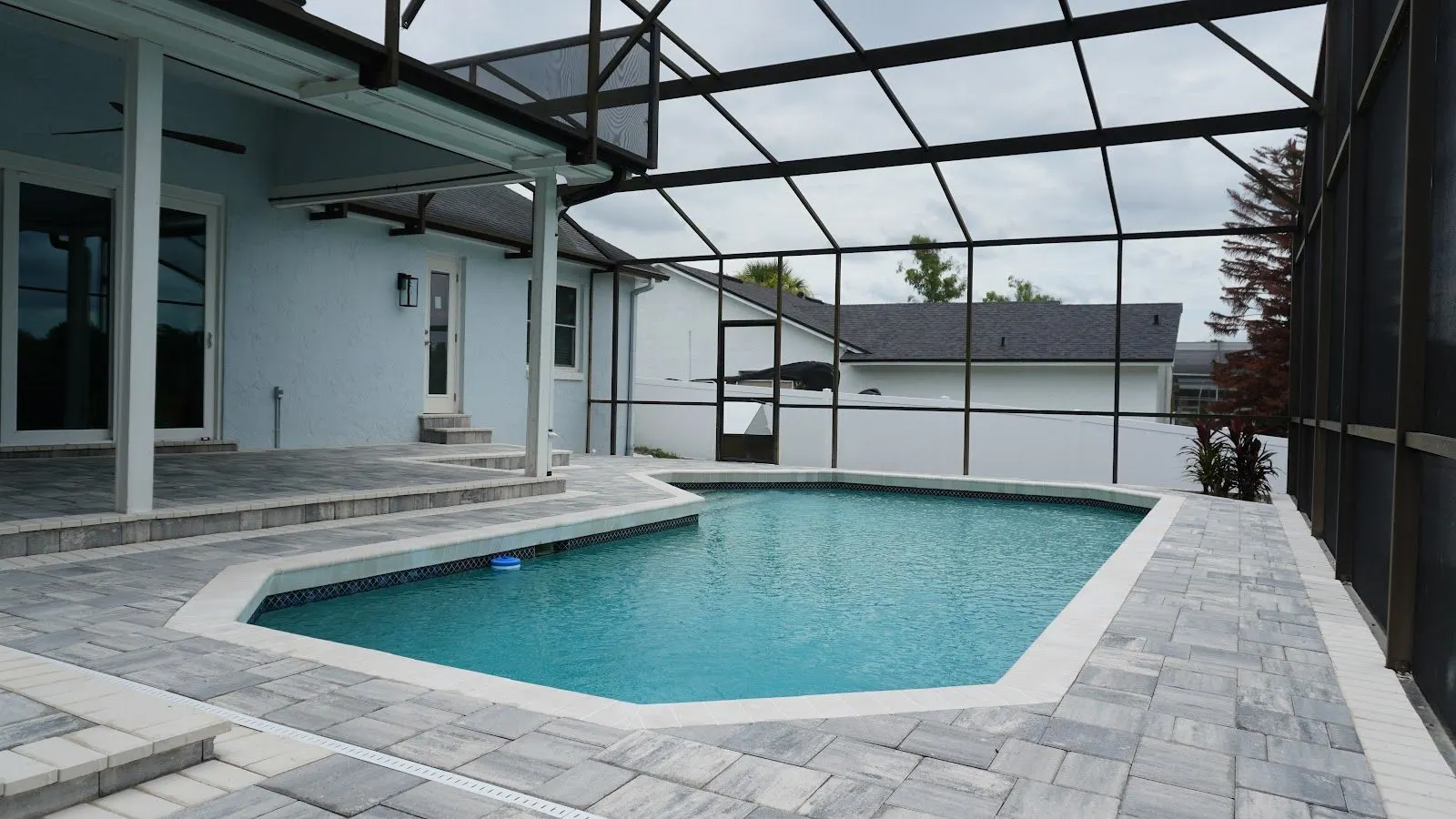
If you are standing at the edge of your pool in July, barefoot, the answer to this question feels simple: you want whatever does not burn. That instinct is a good start. But a pool deck also has to give you grip when it is wet, carry water away from the pool and the house, and hold up to chlorine, salt and twenty Florida summers.
We install both travertine and concrete pavers around pools in Orlando, Windermere, Winter Park and Dr. Phillips. Here is how I explain the difference to homeowners when they ask.
What is the real difference between travertine and pavers?
Travertine is natural stone, cut from a quarry. Each piece has its own veins and small holes, and no two decks look the same. The travertine we use comes from Keystone Tile.
Concrete pavers are made in a factory from concrete poured into molds. They come in a long list of colors, shapes and textures, and every piece matches the next. We install pavers from Tremron and Premier Hardscapes.
Both go down the same way on a good job: dig out, compact a base in layers, set a bedding layer, lay the field, lock the edges and fill the joints. The material on top changes. The work underneath does not.
Which one stays cooler under bare feet?
Travertine, in most cases. It is porous and light in color, and it does not hold heat the way dense concrete does. That is the number one reason families around the Butler Chain of Lakes and in Dr. Phillips ask for it.
Color matters almost as much as material, though. A light gray or sand paver is far more comfortable in August than a charcoal one. If you love the look of a dark paver, keep it for the driveway and use a lighter color where people walk barefoot.
Is travertine slippery when it gets wet?
Tumbled travertine, the kind made for outdoor use, has a rough, open surface that keeps good grip when wet. Polished travertine is slippery and has no place around a pool.
Pavers also grip well. The thing to watch on either material is the sealer. Some glossy sealers make the surface slick. On a pool deck I want a sealer that protects without turning the surface into glass.
Which one costs more?
Travertine usually costs more in material than standard concrete pavers. The labor is similar, sometimes a bit higher with travertine because the stone needs more careful cutting.
The bigger cost on many pool decks is what happens before anything is laid: removing an old cracked slab, fixing the slope, rebuilding the base or replacing the coping. Two quotes with the same material can be far apart because one includes that work and the other does not. Ask every contractor to write it down.
Which one is easier to repair?
Both are easier to repair than poured concrete, which is a big reason people switch. If a piece cracks or a root lifts one corner, we pull those pieces, fix what is under them and reset them. No jackhammer, no patch that never matches.
Pavers have one advantage here: the same color and size stay in production for years, so a replacement piece matches well. With travertine, keep a few spare pieces from your own job in the garage. Natural stone from a later batch can look a little different.
How should a pool deck drain?
Away from the pool and away from the house. That sounds obvious, and it is the part we see done wrong most often when we are called to fix someone else's deck.
Before the first piece goes down, we set the slope on the base so rain runs to the yard, a drain or the lawn. Water that sits on a deck leaves stains and algae. Water that runs toward the pool carries dirt and fertilizer into it. Water that runs toward the house ends up against the foundation.
Can I keep my old concrete deck and cover it?
Sometimes. If the slab is solid, level and already drains the right way, thin pavers or travertine can be installed over it, which saves demolition.
If the slab is cracked, sinking or holding water, covering it only hides the problem for a while. The cracks come back through the new surface. In that case we remove it and build a proper base. I would rather tell you that on day one than come back to fix it in two years.
So which should you choose?
My honest take, after building both in Central Florida: if comfort around the water is your priority and you like natural stone, go with travertine around the pool. If you want more color options, a lower material bill or a deck that matches a paver driveway and walkway, pavers are a great choice.
Many of our clients do both: travertine at the pool, pavers for the walkways and the driveway, planned together so the colors work and the levels meet without a step or a gap. That is the advantage of using one contractor for the whole backyard.
What should I do next?
You can see more of our work on the pool deck page and in the portfolio. If you want to see options on your own yard first, try the Smart AI estimate with a photo of your pool.
When you are ready, request a free estimate on our contact page or call (689) 308-8199. I will come out, check the slope and the old deck, and send the scope and the price in writing.
Frequently asked questions
Is travertine or pavers better for a pool deck in Florida?
Both work in Florida when they sit on a compacted base with the right slope. Travertine stays cooler in full sun and has a natural stone look. Concrete pavers cost less in material, come in more colors and are easy to replace one piece at a time. Most of our Orlando clients pick travertine for the area right around the water and pavers for driveways and walkways.
Does travertine get hot around a pool?
It gets warm, but light travertine stays noticeably cooler than dark pavers or plain concrete in the same sun. Color matters as much as material: a light paver also stays more comfortable than a charcoal one.
Is travertine slippery when wet?
Tumbled travertine has a textured, porous surface that keeps decent grip when wet. Polished stone is the slippery kind, and it does not belong on a pool deck. Pavers also have good grip. Some sealers add shine and reduce grip, so ask what sealer goes on before it is applied.
Can you put travertine or pavers over my old concrete pool deck?
Sometimes. If the old slab is sound, level and drains away from the pool, thin pavers or travertine can go over it. If it is cracked, sinking or holding water, we remove it and build a new base. We decide that on site, not over the phone.
How long does a pool deck installation take?
Most residential pool decks take one to two weeks on site, depending on size, demolition and weather. Coping and any repairs to the pool edge can add time.
Pool Decks
Paver and travertine-style pool decks that stay cooler underfoot, drain well and finish the whole backyard.

Written by Gabriel Carvalho
Gabriel Carvalho is the owner of CoreStone Outdoor Living in Orlando, FL, with 10+ years of hands-on experience building paver driveways, patios, pool decks and outdoor kitchens in Central Florida.
(689) 308-8199Get a written estimate for your Orlando project.
We measure on site, look at drainage and access, and send a written scope and price. No pressure and no surprise add-ons.