

Paver Driveways and Patios Near the Coast: Daytona Beach, Ormond Beach and Palm Coast
Salt air, sandy lots and heavy storms change how pavers should be built on the Volusia and Flagler coast. Here is what we do differently on a coastal job, from the base to the sealer.
By Gabriel Carvalho, owner of CoreStone Outdoor Living
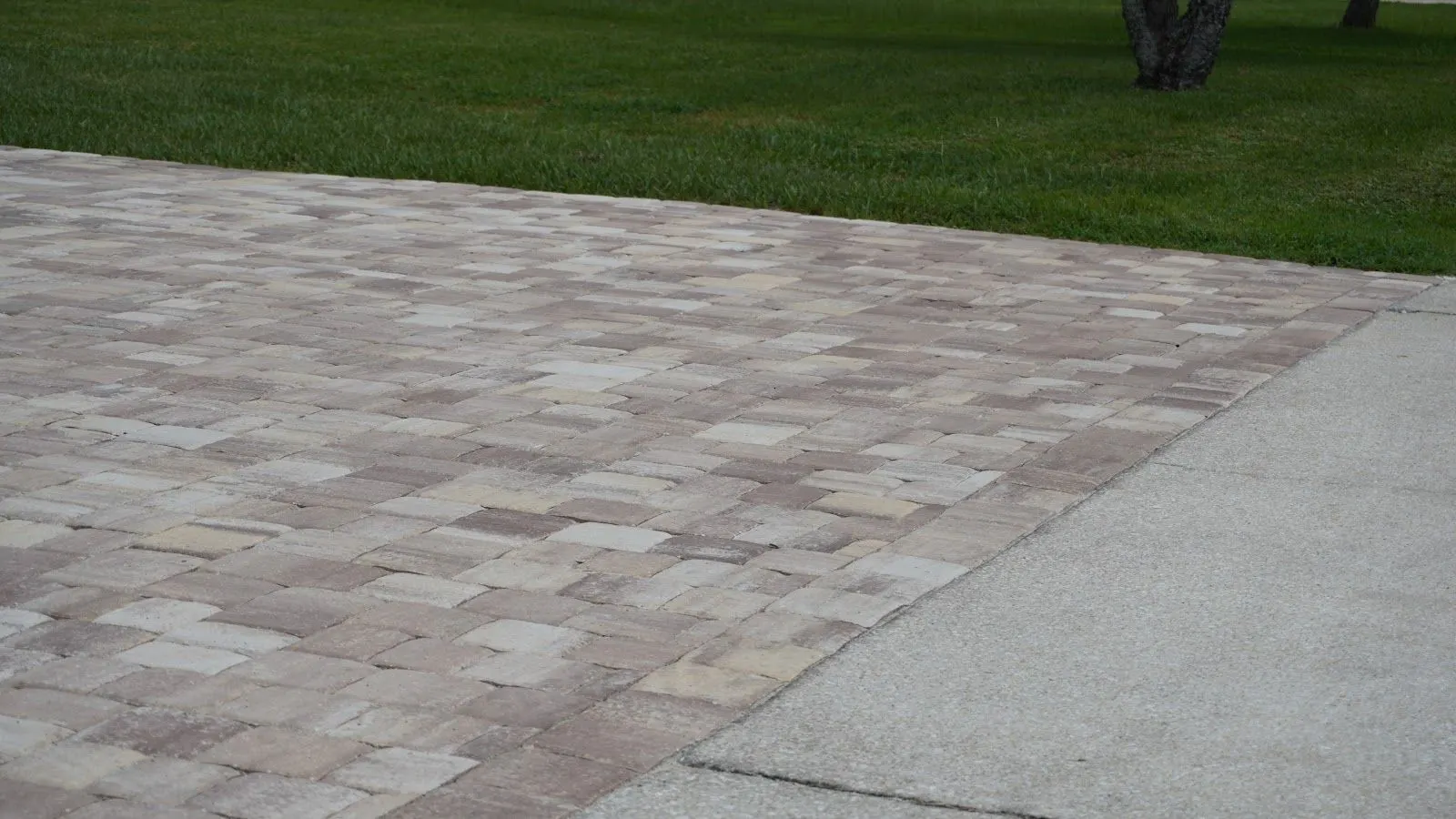
Before CoreStone, a big part of my years in this trade was spent on the coast, between Daytona Beach, Ormond Beach and Palm Coast. The work is the same as in Orlando on paper. In practice, a paver job a few miles from the ocean has to deal with things an inland job barely sees.
What changes when you build pavers near the ocean?
Three things: the soil, the salt and the water.
Coastal lots are often pure sand, sometimes fill brought in when the neighborhood was built. It drains fast, but it also shifts and washes out if water gets under the surface. Salt air leaves a film on everything and works into joints and sealers. And the storms come in harder, with more water in less time.
None of that is a reason to avoid pavers. It is a reason to build them right.
Why do pavers beat concrete on the coast?
A concrete slab is one solid piece. When the sand under it settles or washes out, it cracks, and the crack stays. On many older driveways along A1A and in Palm Coast you can see exactly that.
Pavers are many small pieces locked together. When the ground moves a little, they move with it instead of breaking. If a section sinks, we lift those pavers, fix the base and put the same pieces back. That is why most of our coastal driveways replace a cracked slab.
How should the base be built on sandy coastal soil?
Deeper and better compacted than most people expect. We dig out the loose top layer, bring in aggregate and compact it in layers with a plate compactor. A driveway that carries cars needs more base than a patio or a walkway.
Edge restraints go along every open side. On sand, a paver field without solid edges slowly spreads, and the border rows start to drift into the lawn.
Where does the water go in a coastal storm?
This is the question I ask first on every coastal job. If storm water gets under the pavers and runs through the sand, it carries the sand away and leaves holes under the surface.
We set the slope so water runs off the surface toward the street, a swale or a drain, never toward the house and never into a low spot with nowhere to go. On some lots that means a small drain or a channel at the edge of the driveway. It costs a little more and it is the difference between a driveway that lasts and one that sinks in a corner.
What about salt and the sealer?
Salt air leaves white residue on pavers and slowly wears the joint sand. Two things help. Polymeric sand in the joints, which hardens and holds better than plain sand. And a sealer made for outdoor use near salt, applied after the pavers have cured.
A rinse with fresh water every few weeks, mostly after a windy stretch, keeps the surface clean. That is about all the care coastal pavers need.
Do you work in Daytona, Ormond Beach and Palm Coast?
Yes. Our base is in Orlando, at 306 S McKinley Ave, and we serve Daytona Beach, Ormond Beach, Deltona and Palm Coast, along with the Space Coast down to Vero Beach. For the coastal cities we schedule the job so the crew stays on it from start to finish. On longer drives the minimum project size can be higher, and we say that in the first call, not in the final bill.
Many coastal neighborhoods also have HOAs that approve the color and pattern. We bring samples and a layout you can send in before anything is ordered.
What should I do next?
See how we build driveways on the paver driveway page and check our coverage on the service areas map. If you are comparing paver driveways with concrete, the paver driveway cost guide explains what goes into a bid.
Request a free estimate on our contact page or call (689) 308-8199. We will look at the soil, the slope and where the water goes, and send the scope and the price in writing.
Frequently asked questions
Are pavers a good choice near the beach in Daytona or Ormond Beach?
Yes. Pavers handle salt air and sandy soil better than poured concrete, because they flex when the ground moves and single pieces can be reset. On the coast the base, the drainage and the sealer need more attention than inland.
Does salt air damage pavers?
Salt can leave white residue and slowly wear the surface and the joint sand. A sealer rated for coastal use, a rinse with fresh water now and then, and polymeric sand in the joints keep coastal pavers in good shape.
Do you serve Palm Coast and Ormond Beach from Orlando?
Yes. We serve Daytona Beach, Ormond Beach, Deltona and Palm Coast, along with the Orlando area and the Space Coast. Longer distances can mean a higher minimum project size, which we tell you up front.
Do I need HOA approval for pavers in Palm Coast?
Many neighborhoods in Palm Coast and Ormond Beach have HOAs that approve paver color and pattern. Get written approval before the order is placed. We can give you samples and a layout to send in.
Paver Driveways, Patios & Walkways
Interlocking paver driveways, patios and walkways built on a compacted base made for Central Florida sand and summer storms.

Written by Gabriel Carvalho
Gabriel Carvalho is the owner of CoreStone Outdoor Living in Orlando, FL, with 10+ years of hands-on experience building paver driveways, patios, pool decks and outdoor kitchens in Central Florida.
(689) 308-8199Get a written estimate for your Orlando project.
We measure on site, look at drainage and access, and send a written scope and price. No pressure and no surprise add-ons.