

Paver Sealing and Polymeric Sand in Florida: When, Why and How Often
Sealing and re-sanding keep pavers tight, clean and the right color in the Florida sun and rain. Here is when to do it, what it fixes, what it does not fix and how often an Orlando paver job needs it.
By Gabriel Carvalho, owner of CoreStone Outdoor Living
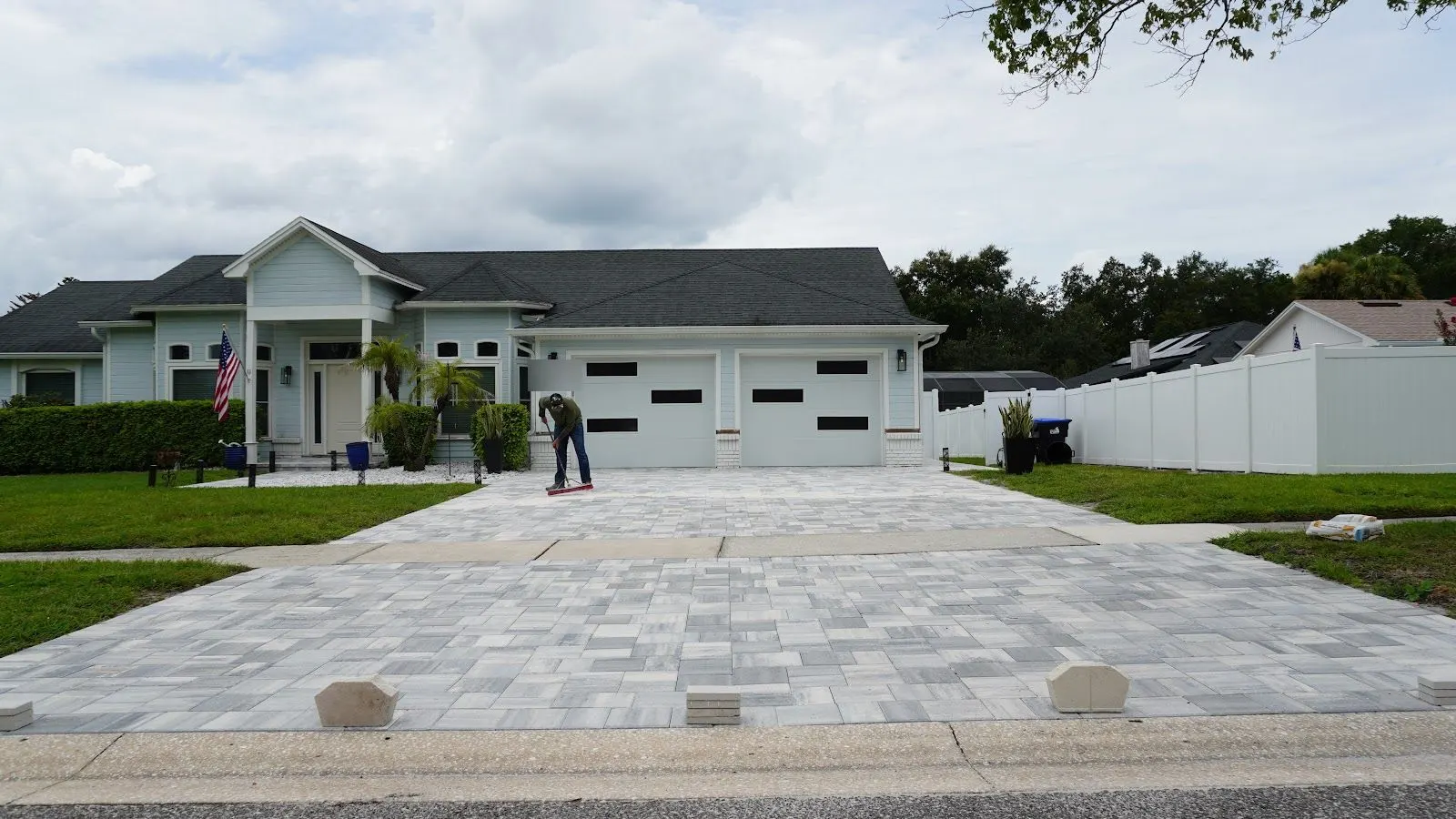
Every few weeks someone calls about pavers that "look old." Faded color, weeds in the joints, sand washed out after a storm, a white film that will not come off. Most of the time the pavers themselves are fine. What is missing is the joint sand and the sealer.
What does sealing actually do?
Sealer is a clear coat that soaks into the top of the paver. In Florida it does three useful things. It slows down fading from the sun, which is strong here all year. It makes oil, rust and leaf stains easier to clean. And it helps bind the top of the joint sand so heavy rain does not wash it out.
Some sealers also darken the color a little, the "wet look." That is a style choice. On pool decks I prefer a sealer that does not make the surface slick.
What is polymeric sand and why do we use it?
The sand between the pavers is not decoration. It locks the pieces together. Without it, pavers start to shift, rock and spread apart.
Polymeric sand is sand mixed with a binder. We sweep it into the joints, compact the field, then wet it down so it hardens. It stays put during Florida storms much better than plain sand, and it makes life harder for weeds and ants. It is the last step on every paver job we build.
How often should you reseal pavers in Florida?
Most surfaces here need a fresh coat every two to four years. A driveway with two cars in and out every day wears faster. A pool deck in full sun and constant splash also sits on the shorter end. A shaded walkway can go longer.
An easy test: sprinkle some water on the pavers. If it beads up, the sealer is still working. If it soaks in and darkens the paver right away, it is time.
When should new pavers be sealed?
Not on day one. New pavers often release a white haze called efflorescence during the first weeks, as salts in the concrete come to the surface. Seal over it and you lock the haze in.
We usually wait until the surface has had time to cure and clean up, then clean it and seal. Your contractor should tell you when, with the product named.
What mistakes do we see most?
Sealing over dirt, haze or old polymeric residue, which traps it under a shiny coat. Applying too thick a coat, which turns cloudy or peels. Pressure washing so hard that the joint sand is blasted out and never replaced. And sealing pavers that are already sinking, hoping it will fix them.
Can sealing fix pavers that are sinking or wavy?
No, and this is the one I want every homeowner to know. Sealer works on the surface. Sunken spots, waves and loose borders come from the base underneath: too thin, not compacted, or washed out by water.
The fix is to lift those pavers, repair the base, put the same pavers back and then re-sand and seal. If someone offers to seal your way out of a sinking driveway, get a second opinion.
How do you keep pavers looking new between sealings?
Sweep or blow them off often. Clean oil and rust stains early. Rinse with a garden hose. If you pressure wash, keep the pressure moderate and the nozzle moving, and refill the joints after. Check the edges once a year for gaps.
What should I do next?
If you are planning a new driveway, patio or pool deck, read why the base matters more than the paver, and see our paver driveway page. Building near the beach? Our guide for Daytona, Ormond Beach and Palm Coast covers salt and sand.
Request a free estimate on our contact page or call (689) 308-8199. We will check the joints, the edges and the base, and tell you plainly what your pavers need.
Frequently asked questions
Do pavers need to be sealed in Florida?
Sealing is not required, but in Florida it is worth it on most driveways, patios and pool decks. It protects the color from the sun, makes stains easier to clean and helps keep the joint sand in place during heavy rain.
How often should pavers be resealed in Florida?
Most paver surfaces in Central Florida need a new coat of sealer every two to four years. Driveways with daily car traffic and pool decks with lots of sun and water are on the shorter end.
What is polymeric sand?
Polymeric sand is joint sand mixed with a binder. After it is swept into the joints and wet down, it hardens. It holds the pavers tight, resists washing out in storms and slows down weeds and ants.
Why is there white haze on my pavers?
White haze is usually efflorescence, salts coming out of the concrete, or residue from polymeric sand left on the surface. Efflorescence fades with time and cleaning. Sealing over it locks it in, so the surface should be cleaned before sealing.
Can sealing fix sunken or uneven pavers?
No. Sealer protects the surface. Sinking and waves come from the base. Those pavers have to be lifted, the base fixed and the pavers reset before anything is sealed.
Paver Driveways, Patios & Walkways
Interlocking paver driveways, patios and walkways built on a compacted base made for Central Florida sand and summer storms.

Written by Gabriel Carvalho
Gabriel Carvalho is the owner of CoreStone Outdoor Living in Orlando, FL, with 10+ years of hands-on experience building paver driveways, patios, pool decks and outdoor kitchens in Central Florida.
(689) 308-8199Get a written estimate for your Orlando project.
We measure on site, look at drainage and access, and send a written scope and price. No pressure and no surprise add-ons.