

Artificial Turf Around a Pool in Orlando: What to Know Before You Install
Turf next to a pool has to drain fast, handle chlorine and stay comfortable in the Florida sun. Most of that depends on the base and the edge where turf meets the deck. Here is what we look at before we install.
By Gabriel Carvalho, owner of CoreStone Outdoor Living
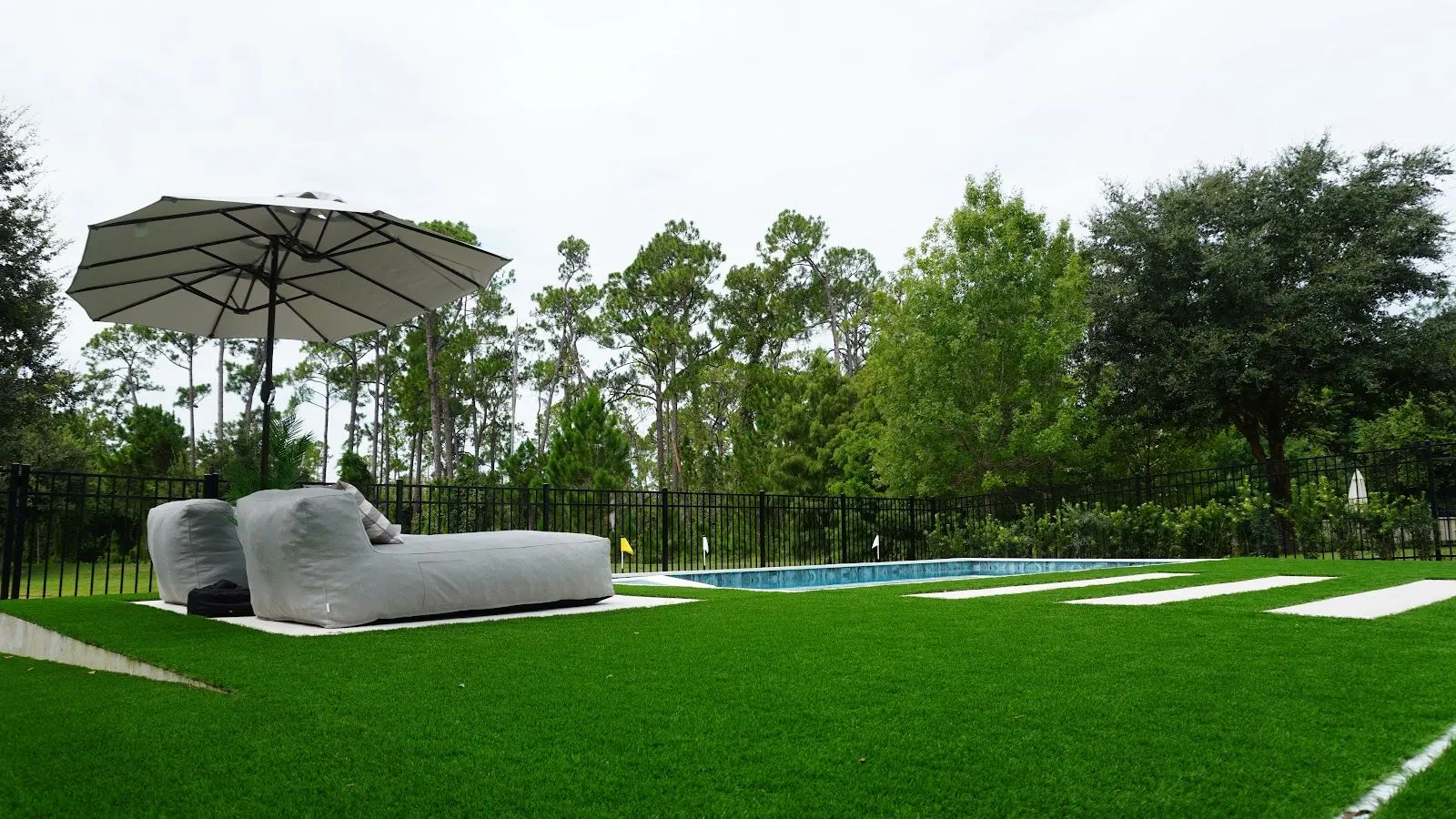
A lot of the backyards we build in Orlando end up with some mix of pool, pavers and artificial turf. Families like turf next to the pool because there is no mud, no brown patches after a dry spell and no mowing around the pool fence. The kids and the dog can run straight from the water onto something green.
It works very well. It also has a few traps that only show up after the first summer if the install is rushed. Here is what we check before we put turf next to a pool.
Can artificial turf go right next to the pool?
Yes. Good turf is not damaged by chlorine or salt water, and the backing lets splash water pass through. What matters is where that water goes next and how the turf meets the pool deck.
On most of our projects we keep a strip of travertine or pavers around the pool edge and start the turf a step back. You get a cooler, harder surface where people climb out wet, and the turf stays out of the splash zone. In smaller yards we run turf closer, sometimes in strips between pavers, and plan the drainage harder.
Why does the base matter so much?
Turf is only as flat as what is under it. Central Florida soil is mostly sand, and sand moves when it gets soaked. Lay turf straight on dirt and within a season you see dips, waves and puddles.
We dig out the soft soil and the old grass roots, compact a gravel base in layers and slope it the way the water should run. It is close to the same process we use under pavers. The base is invisible when the job is done, and it is the main thing you are paying for.
How does turf drain after a Florida storm?
Rain goes through the small holes in the turf backing, into the gravel and then down into the soil or out along the slope. A good base takes a heavy afternoon storm without leaving standing water.
Next to a pool we look at one more thing: where the pool deck sends its water. If the deck slopes toward the turf, the turf area has to take that water too. We plan both at once so one does not flood the other.
Does turf get hot in the sun?
It does. In August, turf in full sun gets warmer than natural grass. That is the honest answer and you should hear it before you buy.
There are ways to manage it. Lighter colors stay cooler. Some infills are made to hold less heat. A quick spray with the hose on a hot afternoon cools the surface fast. And the layout helps: shade from a pergola or a tree, and a cool stone surface right at the water, so turf is where people play, not where they stand barefoot waiting to jump in.
What about the edge between turf and pavers?
This is where cheap jobs give themselves away. If the edge is not fixed, turf pulls back, curls up and leaves a gap of sand along the pavers.
We set a solid edge, usually the paver border itself or a hidden restraint, and fasten the turf against it so the line stays straight. Where turf runs in strips between pavers, the strips are cut and fixed one by one. It takes longer, and it is the detail people notice every time they walk outside.
Is turf good for dogs?
Yes, with a fast-draining base and a little routine. Rinse the pet area with a hose regularly. We can use an infill made for pets that helps with odor. Solid waste comes off like on any lawn.
How much care does it need?
Much less than grass, but not zero. Blow off leaves, brush the fibers up in high traffic areas a few times a year and rinse it. No mowing, no fertilizer, no irrigation bill for that part of the yard.
What should I do next?
See some of our turf and pool projects on the artificial turf page and in the portfolio. If you also need a new deck around the water, our guide on travertine vs pavers for pool decks covers that choice.
Request a free estimate on our contact page or call (689) 308-8199. We will look at the slope, the soil and the pool deck, and send you a written scope and price for the whole area.
Frequently asked questions
Can you put artificial turf right next to a pool?
Yes. Turf next to a pool is common in Central Florida. It needs a base that drains fast, a clean edge where it meets the pool deck, and a product rated for pool areas. Chlorine and salt water do not damage good quality turf, but splash and drainage have to be planned.
Does artificial turf get hot in Florida?
Yes, turf in full sun gets warmer than natural grass. Lighter colors, turf with a cooling infill, and a quick rinse with the hose on the hottest afternoons help. Many families keep travertine or light pavers right at the water and use turf a step back.
How does artificial turf drain?
Water goes through holes in the turf backing and into a compacted gravel base below. The base has to be built and sloped like a paver base. Turf laid on loose dirt or plain sand holds puddles and starts to wave.
Is artificial turf good for dogs in Orlando?
It works well with dogs when the base drains quickly and you rinse the pet area regularly. We can add an infill made for pets that helps with odor.
How long does artificial turf last in Florida?
Good quality turf on a proper base usually lasts many years. Strong UV, heavy traffic and poor drainage shorten that. Brushing the fibers and rinsing it now and then keeps it looking right.
Artificial Turf
Artificial turf with a proper compacted base and drainage, for pools, play areas and low-maintenance yards.
Written by Gabriel Carvalho
Gabriel Carvalho is the owner of CoreStone Outdoor Living in Orlando, FL, with 10+ years of hands-on experience building paver driveways, patios, pool decks and outdoor kitchens in Central Florida.
(689) 308-8199Get a written estimate for your Orlando project.
We measure on site, look at drainage and access, and send a written scope and price. No pressure and no surprise add-ons.